If you are replacing or upgrading an e-bike battery, voltage is the first decision and the one that is hardest to undo. It sets the top speed your motor can reach, how much energy you carry per amp-hour, and which controller and charger you are allowed to use. Capacity is the second decision, and it is mostly about range.
The short version
| Voltage | Typical use | What it demands | Trade-off |
|---|---|---|---|
| 48V | Stock replacements, 500W-1500W hub motors | 48V controller and 54.6V charger | Easiest fit, least speed and headroom |
| 52V | Upgrade on a bike that feels flat | Controller that accepts ~58.8V, 52V charger | More speed and torque, display may read wrong |
| 72V | 3000W-5000W purpose-built conversions | 72V controller and motor, ~84V charger, heavier wiring | Most power, everything else changes too |
48V: the no-surprises option
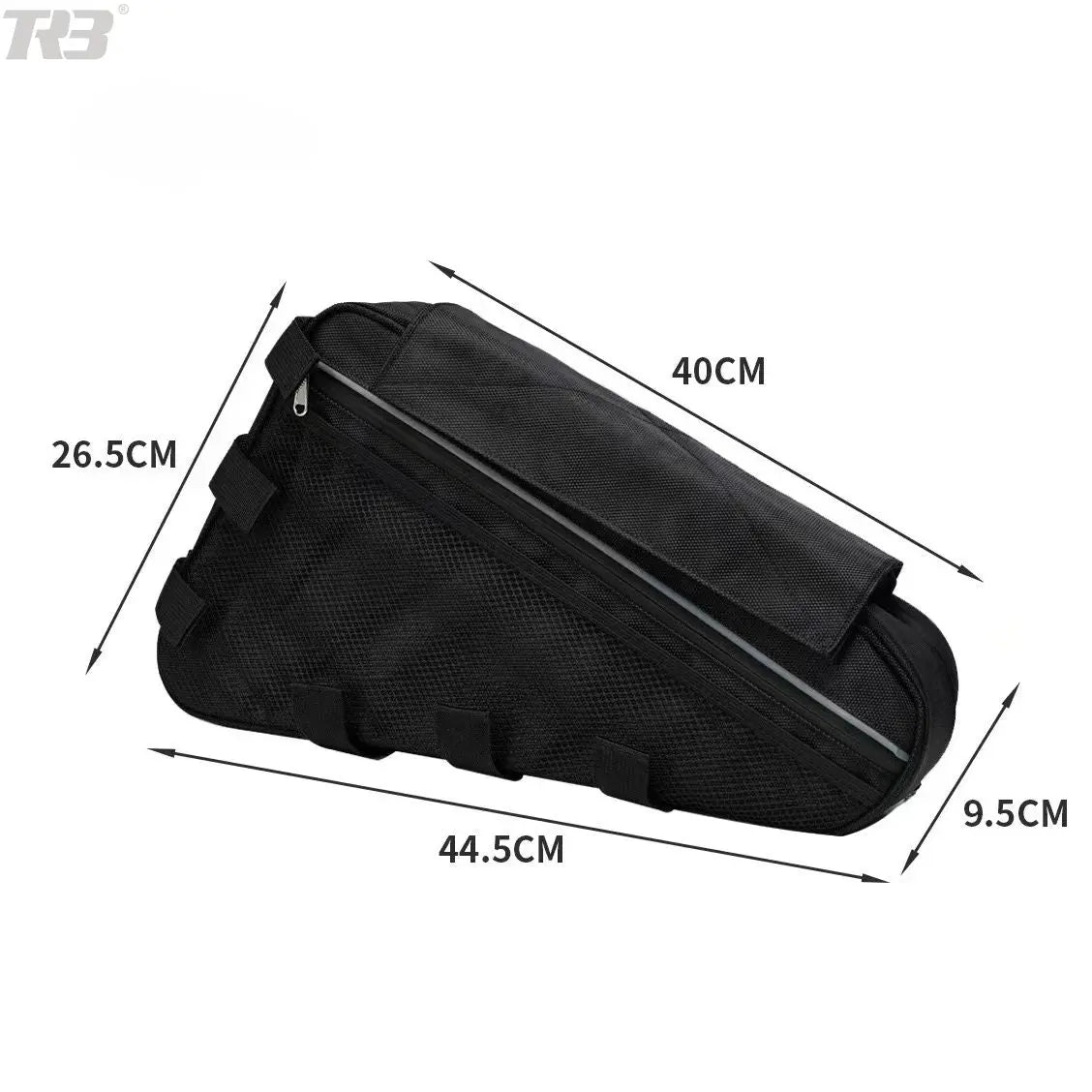
48V is the most widely supported e-bike standard. A 48V pack is a 13S design, roughly 54.6V at full charge, and it matches the controller, charger and display most 48V hub-motor kits already use. Choose it when you want a like-for-like replacement, when you are staying inside local power or speed limits, or when you do not want to re-check every other part on the bike. On this store that is the 48V 20Ah/30Ah hardcase triangle battery.
52V: the common upgrade
A 52V pack is 14S, roughly 58.8V at full charge. That sits below the 63V input capacitors most 48V controllers use, which is why 52V is such a popular upgrade: the same motor spins faster and pulls harder, and often nothing else has to change. Two caveats. Your controller must not trigger over-voltage protection at 58.8V, and a 48V charger will leave the pack undercharged, so budget for a 52V charger. Also expect a battery gauge calibrated for 48V to read incorrectly. See the 52V 20Ah/30Ah hardcase triangle battery.
72V: build on purpose
72V is roughly 84V at full charge on a 20S pack, and it exists for high-power builds where a lower-voltage pack cannot deliver the current without heavy sag. It is not an upgrade for a stock bike: controller, motor, charger, display and wiring all have to be rated for it, and connectors need to be XT90-class rather than XT60. Brakes, tyres and dropouts usually become the limiting parts. If that is the build you are doing, start with the 72V 20Ah hardcase triangle battery and a matched kit such as the 3000W 72V conversion kit.
How much capacity you need
Work backwards from the riding you actually do. Multiply voltage by amp-hours to get watt-hours, then divide by a realistic consumption figure — roughly 15-25Wh per kilometre for an e-bike, with the higher end for fast riding, hills, heavy loads and cold weather.
- 48V 20Ah is about 960Wh, typically 40-65 km.
- 52V 30Ah is about 1,560Wh, typically 60-100 km.
- 72V 20Ah is about 1,440Wh, typically 55-90 km on a high-power build that uses more per kilometre.
These are estimates. Real range depends on rider and cargo weight, tyre pressure, terrain, wind, temperature, assist level and throttle use.
What to confirm before ordering
- Match the pack's nominal voltage to the controller, and the controller's capacitor rating to the pack's full-charge voltage.
- Confirm the charger voltage and the mains plug for the US or Australia.
- Confirm the discharge connector on your bike harness: XT60, XT90 or Anderson.
- Measure the space you have — see our frame measuring guide.
Browse the full e-bike battery collection or the hub motor conversion kits. If you need cell brand, BMS current, exact dimensions or certification documents, ask for the current production batch before you pay. Warranty terms are on the warranty page.