Moving to a 72V e-bike battery is a system change, not a simple capacity upgrade. A safe and workable build requires the battery, controller, motor, display, charger, wiring, connectors, brakes, frame and mounting method to be evaluated together.

What a 72V upgrade changes
Voltage affects the electrical operating range of the complete system. A controller designed for a lower-voltage battery may be damaged or may not operate correctly when connected to a 72V pack. A higher voltage also does not automatically guarantee a specific speed, range or hill-climbing result.
Capacity is normally shown in amp-hours (Ah). Multiplying nominal voltage by capacity provides a nominal watt-hour (Wh) figure that is more useful for comparing stored energy. For example, a 72V 20Ah pack is approximately 1,440Wh, while a 72V 40Ah pack is approximately 2,880Wh. These are calculated comparison values, not guaranteed usable energy or riding range.
Seven checks before changing to 72V
1. Controller voltage range
Read the controller label and technical documentation. Confirm that its minimum and maximum battery-voltage limits match the selected pack throughout the battery's operating range.
2. Controller current and BMS output
Compare controller continuous and peak current demand with the battery BMS specification. Motor wattage alone does not establish battery compatibility. If BMS current is not published for the selected pack, obtain confirmation before ordering.
3. Motor and display compatibility
Confirm that the motor, display and other powered components are intended for the selected controller and voltage. Do not assume that a display or accessory from a lower-voltage system will remain compatible.
4. Charger specification
The charger must be intended for the exact battery chemistry and voltage configuration. Confirm output specification, charge connector and wall-plug type. A connector that physically fits is not proof of electrical compatibility.
5. Connectors, polarity and wiring
Check discharge connector type, polarity, wire gauge, fuse protection, cable routing and connection quality. High-current wiring changes should be completed and inspected by a qualified installer.
6. Frame space and battery retention
Measure the complete mounting area and allow clearance for the enclosure or bag, straps or brackets, cables, connectors and battery removal. The battery must be securely retained without crushing, abrasion or cable strain.
7. Brakes, frame and local requirements
A higher-output custom system can increase mechanical and legal requirements. Inspect the frame, dropouts, torque support, wheels, tires and brakes, and check the rules that apply where the bike will be used.
Range planning
Range depends on usable battery energy and the complete bike's energy consumption. Rider and cargo weight, speed, acceleration, terrain, tire pressure, temperature, wind and system efficiency can all change consumption. Use Wh-per-mile or Wh-per-kilometre estimates only as planning tools, not promises.
Battery options for comparison
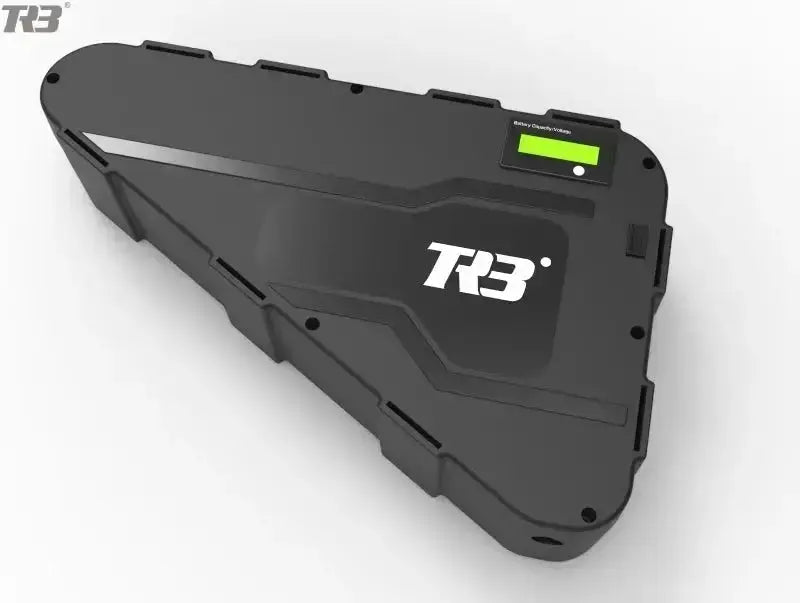
Compare the 72V 40Ah triangle battery, the 52V/60V/72V triangle battery options, and the full battery collection. Before purchase, confirm the current SKU's BMS, charger, connector, dimensions, weight and available documentation.